
Bacteria are among the most ubiquitous organisms on Earth. From the highest mountains to the depths of the oceans, life exists, even if we cannot see it.
Some of them evolved to live inside the bodies of animals, establishing a fundamental symbiotic relationship for both: host and guest. The human body, for example, is replete with microorganisms, on all surfaces, some beneficial and others not so much, with a large part of them residing in our gastrointestinal tract and forming communities that, as a whole, are known as the microbiota.
While, on one hand, microorganisms can live and proliferate in an environment with favorable conditions, on the other, humans and other animals receive a number of benefits. Several studies indicate that intestinal microorganisms help regulate the immune system, digest food, create defenses against pathogens, and even synthesize molecules that regulate the host’s behavior and cognitive abilities.
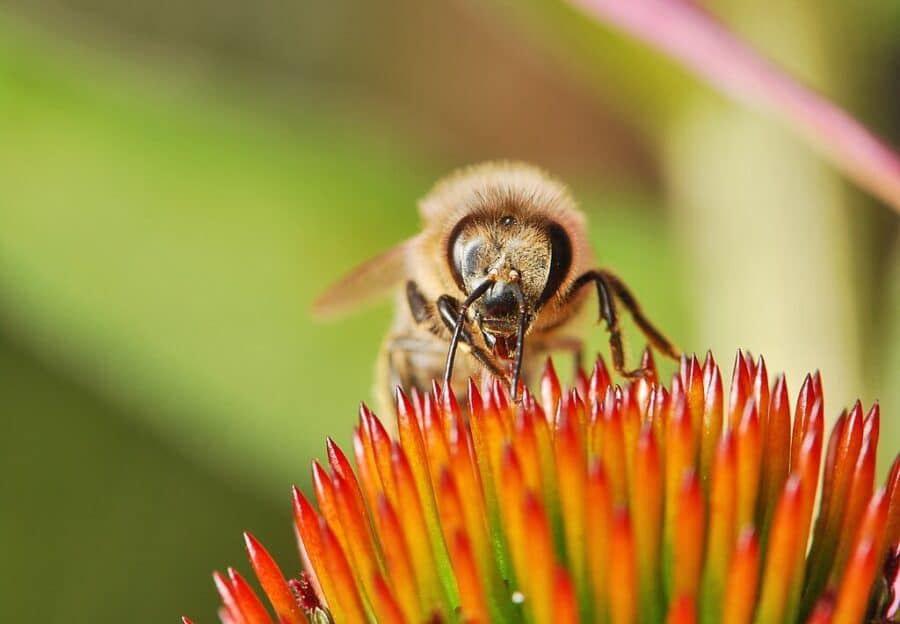
It is a mutualistic relationship, but does it lean more to one side than the other? A study led by the University of Lausanne, in Switzerland, sought to unravel the mysteries of this symbiosis and, to do so, turned to the honey bee (Apis mellifera) to understand how this animal relates to the bacteria in its gastrointestinal system.
In a statement, the team, which reports the findings in an article published this week in the journal Nature Microbiology, explains that this species of bee “has a relatively simple system to study, compared with humans and their intestinal microbiota.” These insects, they continue, “have acquired an extraordinarily simple and stable microbiota, composed of only 20 species of bacteria.” It is estimated that the human gastrointestinal tract is populated by around a thousand different bacterial species.
Through laboratory experiments, the researchers found that the bee’s own organism is capable of boosting gastrointestinal colonization by beneficial bacteria. For example, one of the bacteria living in the honey bee is Snodgrassella alvi, which cannot use sugar to grow and multiply.
However, when given the bee only sugar water, without any other nutrients that are present in pollen and nectar it would collect in the wild, they observed that S. alvi, even so, was able to colonize the insect’s gastrointestinal tract.
To try to answer this question, they measured the bee’s metabolites and found that the animal is capable of synthesizing “multiple acids (…) that are exported to the intestines,” thereby helping to break down the sugar so that S. alvi could obtain the energy necessary for colonization.
The results lead the team to confirm that, in fact, “the bee synthesizes food for its intestinal bacteria,” and they suggest that the same process could occur for other species of bacteria and even for other types of microorganisms.
“This may also explain why bees have such a specialized and conserved gastrointestinal microbiota,” says Andrew Quinn, the article’s first author. But this specialization may also leave bees especially vulnerable to changes in the environmental conditions in which they live.
“Their vulnerability could result from a disruption of this intricate metabolic synergy between the bee and its intestinal microbiota. We already know that exposure to the herbicide glyphosate makes bees more susceptible to pathogens and reduces the abundance of S. alvi in the gut,” emphasizes Quinn.