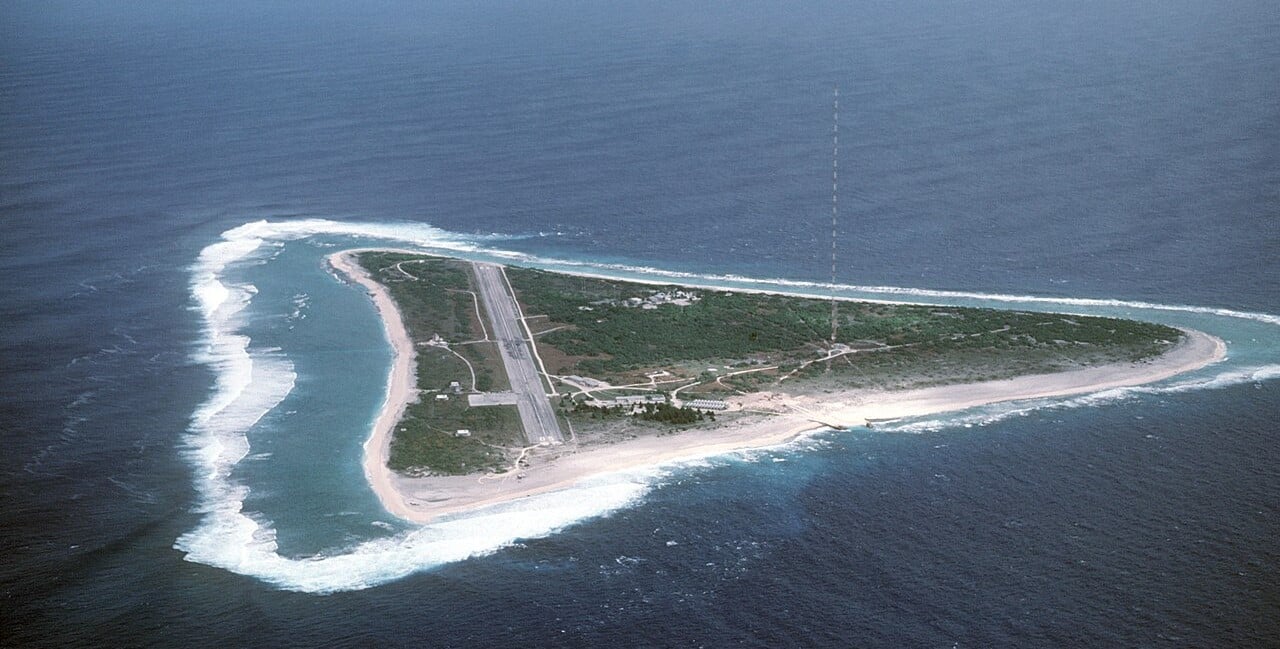
A group of Japanese researchers extracted rare-earth elements from a seabed deposit near Minami Torishima Island, in the Pacific Ocean, about two thousand kilometres south of Tokyo, the Minister of Education and Science confirmed.
“The Japan Agency for Marine-Earth Science and Technology (JAMSTEC), under the jurisdiction of the Ministry of Education, Culture, Sports, Science and Technology, successfully recovered rare-earth-rich mud at a depth of six thousand meters, using the research vessel Chikyu,” wrote Minister Yohei Matsumoto on the X social network on Sunday.
Matsumoto stated that JAMSTEC would release further details about the operation in a press release on Tuesday.
The Chikyu began on January 12 an unprecedented mission with the aim of extracting rare-earth elements from the deep waters near Minami Torishima, an uninhabited island, in order to reduce the country’s economic dependence on China.
The mission of the deep-sea scientific drilling ship is expected to last until February 14.
The test comes at a time when China, by far the world’s largest supplier of rare earths, is increasing pressure on the neighboring country.
The Chikyu’s voyage could lead to domestic production of rare earths, Shoichi Ishii, the Director of Programs in the Prime Minister’s Office, said on January 12.
“We are considering diversifying our supply sources and avoiding excessive dependence on certain countries,” he told reporters.
It is estimated that the area around Minami Torishima contains more than 16 million tonnes of rare earths, which would make it, according to the financial newspaper Nikkei, the third-largest deposit in the world.
The “rare earths”, 17 metallic elements not particularly rare, but difficult and expensive to extract, are essential for entire sectors of the economy – automotive, renewable energy, digital, defense –, serving for the manufacture of powerful magnets, catalysts and electronic components.
China accounts for almost two-thirds of global mine production of rare earths and 92% of refined production, according to the International Energy Agency.
The country has long used its dominance in the area as a geopolitical lever, including in the trade war with the United States.
Japan depends on China for 70% of its rare-earth imports, although it has worked to diversify its supply sources since the earlier conflict in 2010, during which Beijing suspended exports for several months.
Tokyo and Beijing are facing a diplomatic crisis, triggered by statements by Japanese Prime Minister Sanae Takaichi, who admitted a military response in the event of a Chinese attack on Taiwan, whose sovereignty is claimed by Beijing.
As a sign of worsening bilateral tensions, Beijing announced in early January that it would tighten controls on exports to Japan of dual-use Chinese civilian and military goods, which could include rare earth metals.