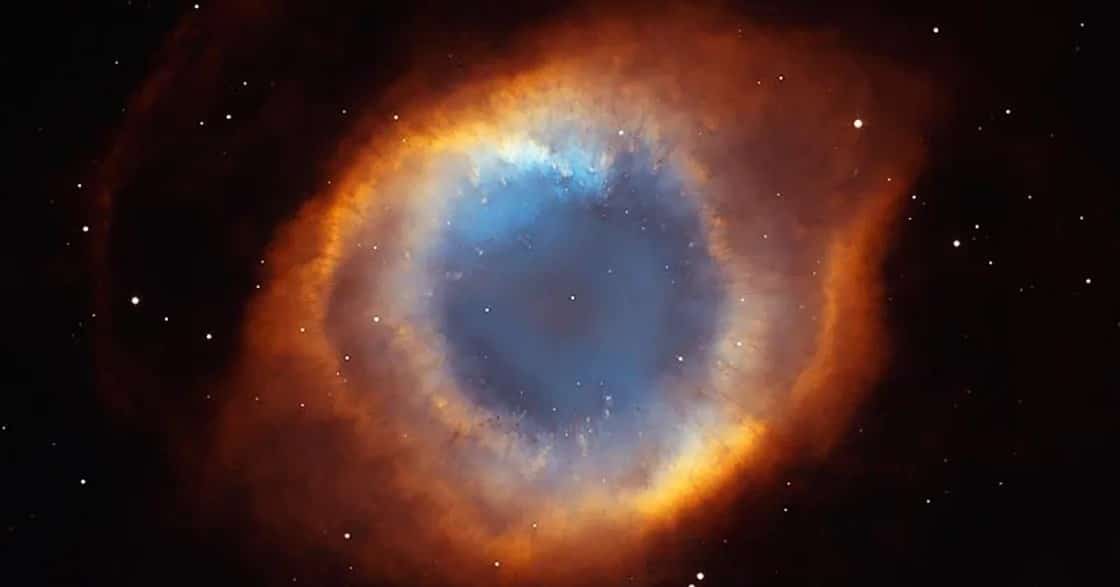
A PhD student at the University of Sydney has managed to recreate cosmic dust in the laboratory, in a breakthrough that could help clarify how the first chemical blocks of life on Earth emerged. By simulating extreme environments similar to those around stars and supernovae, the research sheds new light on the origin of organic molecules long before the planet formed.
Linda Losurdo, a PhD student in materials physics and plasmas at the School of Physics of the University of Sydney, produced cosmic dust from scratch using a simple combination of gases — nitrogen, carbon dioxide, and acetylene — subjected to high-intensity electrical discharges. The process mimics the energetic conditions of interstellar space, where this kind of dust forms naturally.
The results of the work were published in the scientific journal The Astrophysical Journal, of the American Astronomical Society.
The dust created in the laboratory revealed a complex mix of carbon, hydrogen, oxygen and nitrogen — known as CHON elements — fundamental for the formation of organic compounds essential to life.
“We no longer need to wait for an asteroid or a comet to reach Earth to understand its history,” explains Linda Losurdo. “We can create analogous environments in the laboratory and reconstruct their structure through infrared signatures. It’s like recreating a small piece of the Universe inside a bottle.”
Cosmic dust forms in extreme astrophysical environments, where molecules are constantly bombarded by ions and electrons. Scientists can identify it in space thanks to its characteristic infrared signatures — a kind of molecular fingerprint. The dust produced in the experiments displayed exactly these same signatures, confirming that the experimental process faithfully reproduces what happens in space.
Clues about the building blocks of life
One of the major open questions in science is how life on Earth originated. Researchers debate whether the first organic molecules formed on the planet itself, arrived later carried by comets and meteorites, or were delivered in the early stages of the Solar System’s formation.
Between about 3.5 and 4.56 billion years ago, Earth was heavily bombarded by meteorites, micrometeorites, and interplanetary dust from asteroids and comets. These bodies would have brought large amounts of organic material, though its origin remains poorly understood.
According to the investigator, the chemical bonds between carbon and hydrogen present in comets and asteroids would have formed in the outer regions of stars, in high-energy events such as supernovae or in interstellar environments. “Our goal is to understand the chemical pathways and the specific conditions that allow all the CHON elements to be integrated into the complex organic structures that we observe in cosmic dust and in meteorites,” she says.
How the experiment was conducted
In the laboratory, the team — comprising Linda Losurdo and her supervisor, Professor David McKenzie — used evacuated glass tubes with a vacuum pump, simulating the almost-deserted conditions of space. After introducing the gases, they were subjected to about 10,000 volts for approximately one hour, creating a plasma known as a “glow discharge.”
Under this intense energy, the molecules fragmented and recombined into more complex structures, which ended up deposited as a thin layer of dust on silicon chips placed inside the tubes.
For Professor David McKenzie, the method allows studying conditions that are impossible to observe directly. “By producing cosmic dust in the laboratory, we can investigate the intensity of ion impacts and the temperatures involved in its formation in space. This also helps us interpret the chemical pathways recorded in meteorites and asteroid fragments,” he explains.
In addition to contributing to the debate on the origin of life, the team plans to create a database of infrared signatures of laboratory-produced cosmic dust. This tool could help astronomers identify promising regions of space — such as stellar nurseries or remnants of dead stars — and understand the processes that shape them.
The work also earned Linda Losurdo the best presentation award at the Meteoritical Society’s annual meeting held at the end of last year.