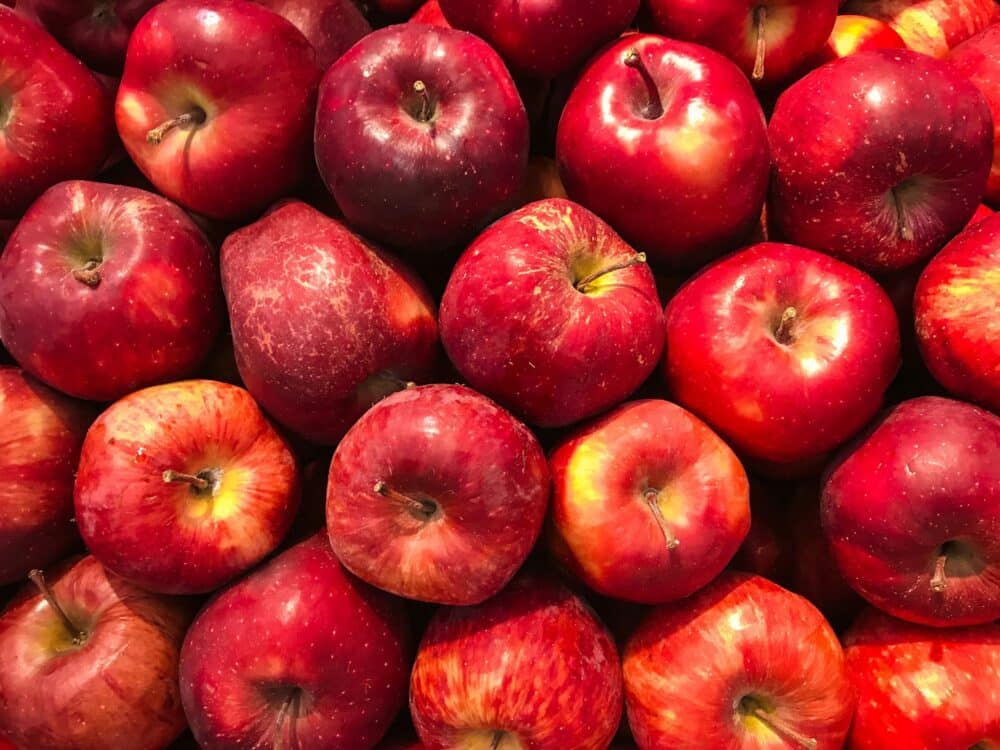
A coalition of non-governmental organizations focused on environment, health, and agriculture warns that toxic “pesticide cocktails” were found in apples sold in Europe.
In a press release, PAN Europe, which includes the Portuguese groups Zero and Quercus, analyzed 59 apple samples across 12 European Union countries and Switzerland to detect pesticide residues. Portugal was not covered by this study.
In a report released this Thursday, it states that pesticide residues were detected in 85% of the samples, in a manner that the coalition describes as “the almost systematic contamination of conventional apples with pesticide cocktails.” In some samples, up to seven different chemical substances were detected.
The environmentalists say that if these apples were sold as processed baby food, such as fruit purées, those products would be banned, since the pesticide residues exceed the safety limits defined for children under three years old.
“There is growing scientific evidence that exposure to pesticides through food is linked to infertility and possibly cancers,” says Gergely Simon of PAN Europe, in a press release.
“The constant exposure of citizens to mixtures of toxic substances through food, air, or dust is not taken into account,” he laments, adding that “this important issue must be addressed by regulators.”
Seventy-one percent of the sampled apples contained residues of at least one pesticide belonging to the EU’s most toxic category, the so-called “candidates for substitution,” which the bloc is trying to phase out.
According to the report, 64% of the samples contained at least one pesticide based on per- and polyfluoroalkyl substances (PFAS), also known as “eternal chemicals.” For example, Fludioxonil, a PFAS-based pesticide, was found in almost 40% of the samples tested, a substance classified as an endocrine disruptor in 2024 in the EU.
Fludioxonil should already have been banned, says PAN Europe, “but member states have been blocking this for over a year.” “It is toxic to the liver and kidneys of humans and it devastates fish and amphibians in aquatic environments.”
Martin Dermine, executive director of the coalition, argues that “if the EU and the national regulatory authorities properly implement the law, a number of pesticides detected in apples would have long been banned.”
The report authors recommend European consumers to prefer organic apples or to peel conventional apples, the latter suggestion also applying to other fruits and vegetables to reduce the amount of pesticides that could be ingested.