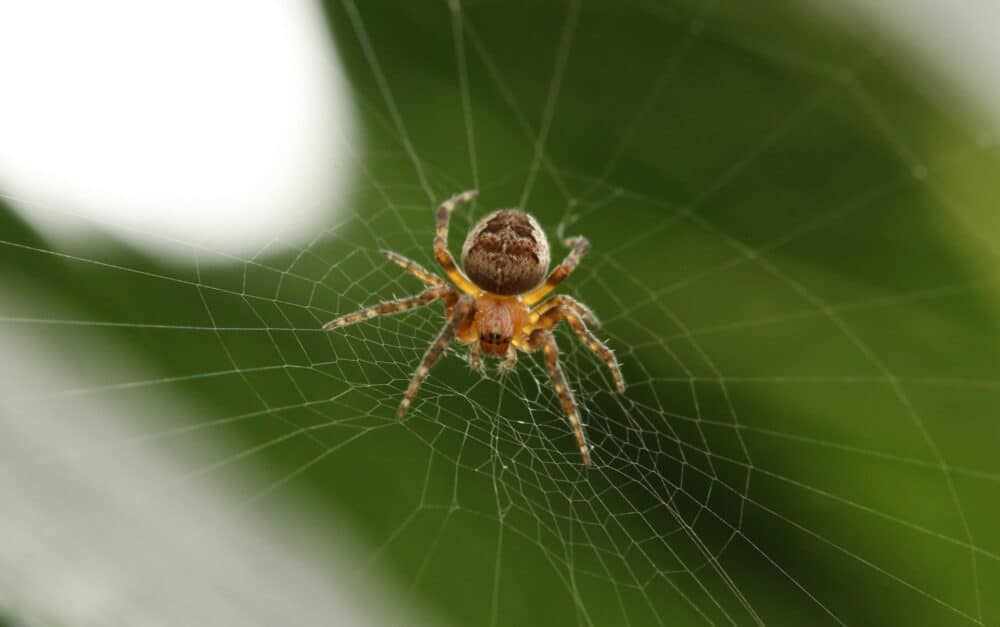
Arthropods, a group of invertebrates that includes spiders, scorpions, and mites, emerged in the sea about 500 million years ago, and not on land.
Three scientists from the United States of America and the United Kingdom, in an article published in the journal Current Biology, argue that a small fossil of an animal that lived in the Cambrian Period named Mollisonia symmetrica should change the way science looks at the evolutionary history of arachnids.
Until now, it was thought that Mollisonia was an ancestral member of a group of arthropods that includes the ancestors of eurypterids (or horseshoe crabs). However, upon analyzing the fossil, the researchers realized that the neuronal structure of Mollisonia is, in fact, organized in the same way as that of modern spiders.
Through a deeper examination of this fossilized animal, the team concluded that it is, indeed, an arachnid, and therefore, they argue, that this eight-legged group of arthropods originated in the sea and not only after their ancestors had conquered the terrestrial world.
The researchers confirm that the similarities between Mollisonia’s brains and those of modern arachnids are not the result of convergent evolution, but rather that Mollisonia’s lineage gave rise to the arachnids we know today.