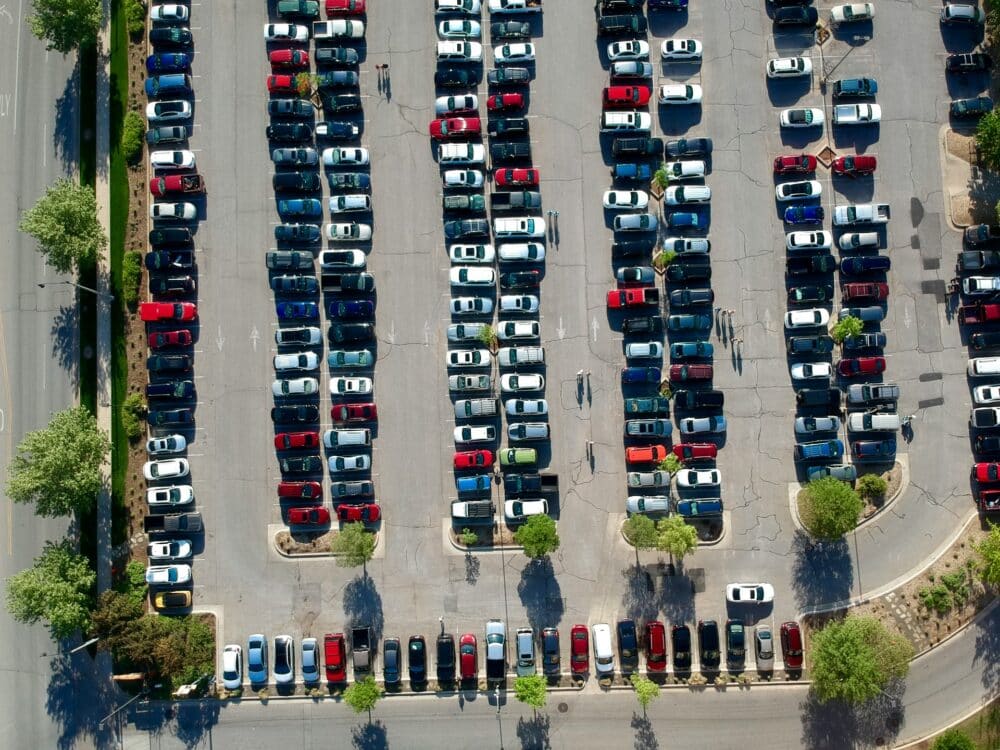
Every day, hundreds of thousands of cars circulate through the city of Lisbon, as well as through other major urban centers. Besides being a headache for those who have to face long traffic jams daily, vehicles can also contribute to the rise in temperature.
A study led by the Institute of Geography and Territorial Planning (IGOT) of the University of Lisbon reveals that cars with dark paint reflect only 5% to 10% of solar radiation, whereas lighter ones can reflect up to 85%.
In a paper published in the journal City and Environment Interactions, scientists, also from the TERRA Associate Laboratory, of University College Dublin (Ireland) and the University of São Paulo (Brazil), tested two cars – one white and the other black – parked in the capital for several hours, exposed to the sun and to a summer temperature of 36 degrees Celsius.
The darker car raised the surrounding air temperature by up to 3.8 degrees, while the effects of the lighter car on the ambient temperature were much smaller. Accordingly, and given that it is estimated that around 10% of Lisbon’s roads and streets are occupied by parked cars for almost the entire day, the scientists say that the greater the prevalence of dark cars, the greater the urban heat island effect will be.
Based on the results obtained, they conclude that the materials and colors of cars function as “active thermal volumes”, just like buildings, influencing the urban microclimate and the thermal comfort of pedestrians.
“From an urban planning perspective, it may be important to consider parking restrictions based on color in thermally sensitive zones, such as prohibiting dark-painted cars in the hottest areas or encouraging the use of reflective coverings,” the researchers write in the article.
In addition, they also suggest that the installation of coverings in open-air parking lots could help mitigate heat exposure, as well as planting trees and reinforcing green infrastructure (such as green roofs and vegetated facades on buildings) to increase evapotranspiration, shade, and ventilation in cities, especially in the hottest areas.