
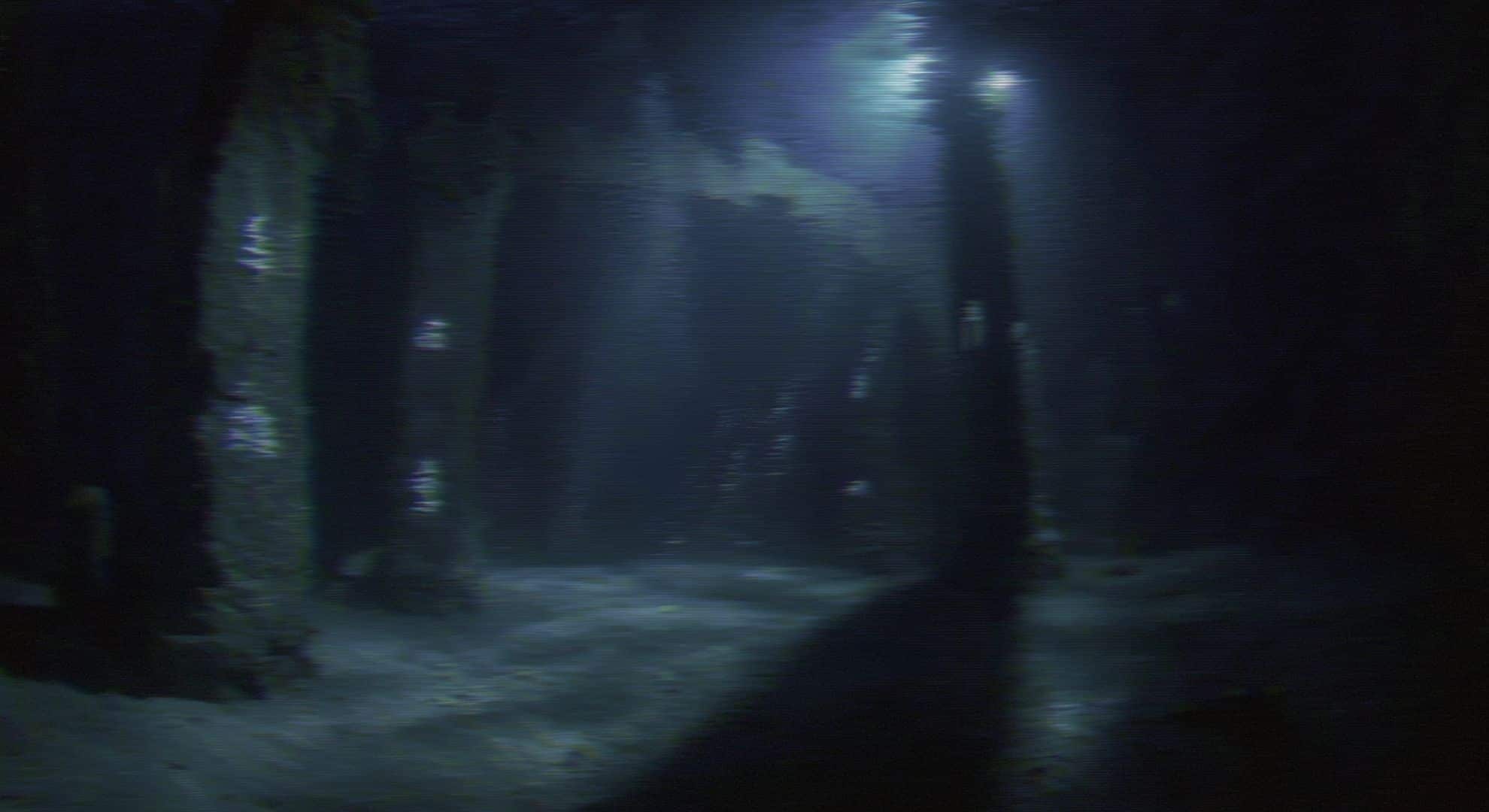
What began as a routine deep-sea mission has turned into one of the most astonishing archaeological discoveries of recent decades. An autonomous underwater robot, operating far beyond the reach of human divers, has detected a perfectly preserved ancient site resting at an extreme depth on the ocean floor. The discovery is already forcing scientists to rethink what they believed was possible about human history and underwater preservation.
At first, researchers assumed the unusual signals were geological. But as high-resolution data came in, it became clear that this was something else entirely.
A routine mission that took a dramatic turn
The robot was deployed to map deep-ocean terrain, a task it performs autonomously for weeks at a time. Using sonar, optical sensors, and environmental scanners, it slowly traced the contours of the seabed. Then, at a depth exceeding anything previously explored for archaeology, the system flagged symmetrical structures that did not match natural formations.
Further passes revealed organized layouts, sharp angles, and material patterns that strongly suggest human design. The level of preservation immediately stunned the research team, who had expected any ancient remains at such depth to be heavily degraded.
One scientist involved in the mission described the moment clearly:
“We were looking at something that should not look this intact after thousands of years underwater.”
Why this site is so extraordinary
Underwater archaeology usually faces one major enemy: time. Salt, pressure, biological activity, and shifting sediments typically erase fragile structures. Yet this site appears remarkably untouched, as if sealed away from destructive forces.
Experts believe several rare conditions may have contributed. The extreme depth creates low temperatures, minimal light, and reduced biological interference. Combined, these factors can act like a natural preservation chamber, freezing history in place.
What makes this discovery even more striking is that it lies far deeper than any previously confirmed ancient site, well beyond known coastal settlements that were submerged by rising seas.
What the robot actually found
While researchers remain cautious, preliminary analysis suggests the presence of organized structures rather than isolated artifacts. The data points toward a site that was intentionally built, not scattered by currents or collapse.
Key elements detected so far include:
- aligned stone-like formations, rectangular layouts suggesting foundations, material densities inconsistent with natural rock, repeating geometric patterns across a wide area
Together, these features strongly support the hypothesis of a coherent ancient site, not a random anomaly.
How autonomous robots are changing discovery
This find highlights a quiet revolution in exploration. Autonomous robots can operate longer, deeper, and more precisely than any crewed mission. They do not require light, air, or rest, and they can adapt their path in real time when something unusual appears.
Until recently, vast areas of the ocean floor were effectively invisible. Now, with machines capable of independent decision-making, scientists are beginning to see how much of Earth’s past may still be hidden below.
A marine archaeologist commented on this shift:
“We are no longer limited by human endurance. The ocean is finally giving up secrets we couldn’t even look for before.”
What this means for human history
The biggest unanswered question is how old the site is and who built it. If dating confirms great antiquity, it could challenge existing timelines about early human settlement, migration, or coastal civilizations. Some researchers speculate that it may relate to communities lost during ancient sea-level changes, while others caution against jumping to conclusions.
What is certain is that the discovery opens new avenues of research. If one such site exists, there may be many more, preserved in silence at depths we have barely explored.
Why scientists are proceeding with caution
Despite the excitement, experts emphasize restraint. No physical excavation has taken place yet, and all interpretations are based on remote data. Future missions will focus on non-invasive verification, ensuring the site remains intact while its nature is better understood.
Still, even the most conservative voices agree on one thing: this is not a false alarm.
A silent reminder beneath the waves
This unprecedented find is more than a technological success. It is a reminder that human history is not confined to dry land. Vast chapters may lie submerged, untouched, waiting for machines—not myths—to uncover them.
As the autonomous robot completed its mission and returned its final data packet, researchers were left with a rare feeling in modern science: the certainty that something truly new has been found.
And somewhere in the darkness of the deep ocean, history remains quietly intact, far beyond where we ever thought to look.