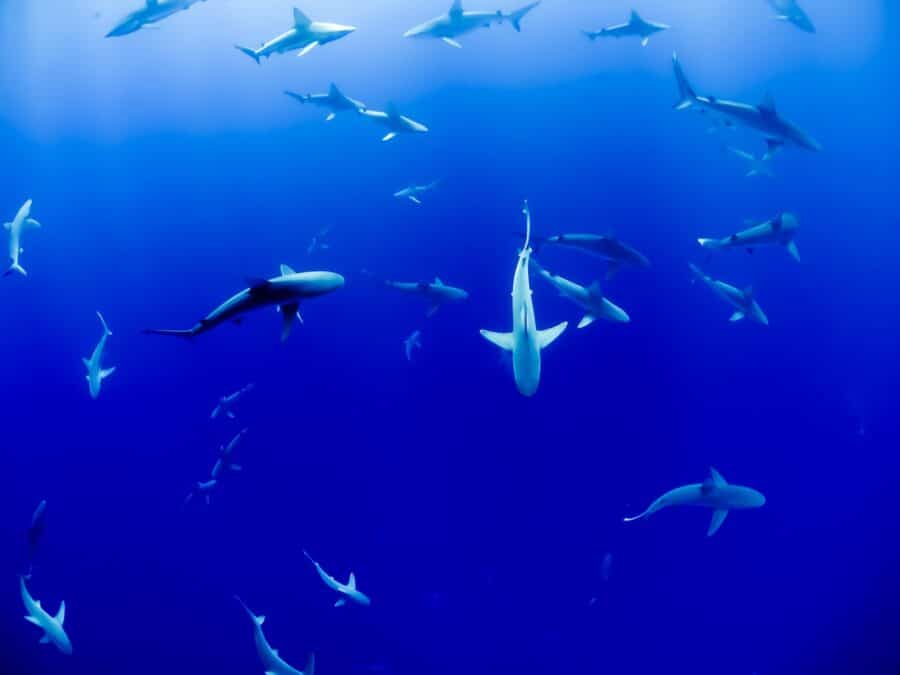
A team of specialists from the International Union for Conservation of Nature (IUCN) identifies more than 750 areas that are critical habitats for migratory sharks and rays.
The work, presented in a report published in December last year, is described by IUCN as “the clearest picture to date” of the areas that are essential for the reproduction, feeding, movement and refuge of these marine animals, members of the elasmobranch group.
These areas of great importance for sharks and rays are found all around the world, from the icy waters of the Arctic to the Pacific Ocean, to the Indian Ocean, spanning the Atlantic, the Mediterranean and the Black Sea, and even off the coasts of island nations in Southeast Asia and in inland waters of South America.
Among the maps created by the team of researchers from the IUCN Sharks Specialist Group there are areas located in Portuguese waters.
The Azores, the Garajau Partial Natural Reserve and the Marine Caves of Funchal on the island of Madeira and the seamount known as the Gorringe Bank (about 200 kilometers from Sagres Point which in 2025 became a protected marine area) are part of the list of habitats critical for sharks and rays.
In addition to these, the Vicentine Coast, Arrábida, Sesimbra, the Setúbal Peninsula and the Algarve, especially the waters off Cape St. Vincent and off Cape of Faro, are places of great importance for the survival of these marine beings, highlighting Portugal’s responsibility in the protection and conservation of what is considered the world’s second most threatened group of vertebrates.
It is estimated that more than a third of all species of rays and sharks worldwide face extinction risk, mainly due to overfishing that reduces prey numbers, bycatch mortality and entanglement in abandoned or discarded gear at sea, the destruction of their habitats and the increasingly severe impacts of climate change.
Because of all this, the specialists and authors of this report consider it extremely important to know which areas of the global ocean are most important for the survival of these marine animals to help governments, regional bodies and maritime management authorities to integrate biodiversity conservation into maritime planning, into policies directed at fishing, into environmental impact assessments and into conservation efforts.
Rima Jabado, leader of the IUCN Sharks Specialist Group, explains that the identified areas are the places “where conservation actions will have the greatest impacts.”
For her, the data presented in the report give governments the scientific evidence they need “to safeguard these habitats before it is too late.”
Several of these areas overlap with fishing zones, routes of maritime transport and other human enterprises, which, the authors say, demonstrates “the urgent need to integrate biodiversity science into ocean-use decisions.”