
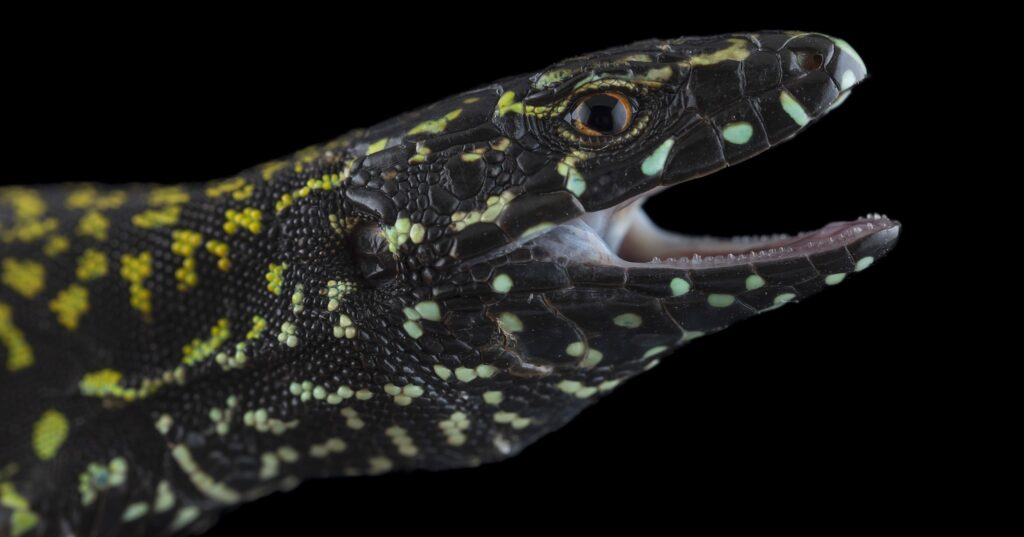
In some regions of Italy, wall lizards are beginning to lose their color diversity, becoming surprisingly similar, according to scientists at the University of Tasmania.
Usually, these lizards display inconspicuous brown backs, but their throats show vibrant colors — white, yellow, or orange. This variation is associated with essential behaviors such as competition, mate choice and survival, and has persisted for millions of years.
A study published in the journal ‘Science’ concluded that the cause of this loss of diversity is the rapid spread of a larger and more aggressive form of the same species, nicknamed the wall lizard “Hulk”.
The name “Hulk” refers to its intense green and black coloration and dominant behavior. Although it belongs to the same species (Podarcis muralis), this form is distinguished by being larger, stronger and more aggressive than the common wall lizards, easily defeating rival males and dominating access to mates and territories. In addition, it has only one throat color: white.
Originating from a region near Rome, the Hulk wall lizard spread rapidly, reaching almost to the border with France. An analysis of color patterns in more than 150 populations revealed that, in places invaded by the ‘Hulk’, yellow and orange varieties disappeared, leaving only the white variant.
According to Geoff While, from the University of Tasmania and co-author of the study, ‘this color system has survived ice ages and major climate changes, but collapsed quickly due to the arrival of a single type of wall lizard.’ Genetic investigation indicated that the color loss occurs because yellow or orange individuals are less competitive against the newer, more aggressive and stockier rivals.
The study demonstrates how evolutionary systems that appear stable over millions of years can be quickly altered when a new trait changes the dynamics of competition and social behavior. Sometimes, all it takes is a single powerful ‘intruder’ to transform the entire diversity.