Children from all cultures can anticipate the choices of other individuals based on their preferences, according to a study published in the open-access journal PLOS ONE by Juliane Kaminski of the University of Portsmouth and colleagues. However, non-human great apes seem not to have this ability.
Understanding the beliefs, desires and preferences of others is known as “theory of mind”, but it is still not known whether this capacity is exclusive to human beings.
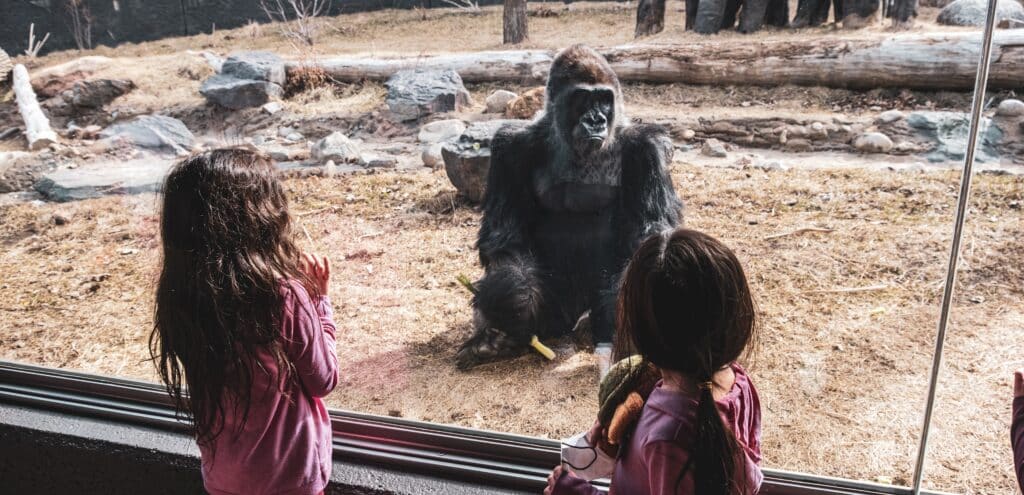
The researchers investigated whether children and non-human great apes could predict the food choices of others based on their preferences. They tested 71 children aged between 5 and 11 years, from Namibia, Germany and Samoa, and 25 great apes from four species: chimpanzees, bonobos, gorillas and orangutans.
The children and the apes were paired with an adult human competitor, who indicated a food preference that matched or differed from theirs. Each participant was asked to choose one of three food rewards, after their competitor had made a private selection.
The children did not choose their preferred option when paired with a competitor who shared their preference, thereby maximizing the chance that the option chosen would still be available. But they selected their preferred food when the competitor’s preference differed from their own. By contrast, the non-human great apes tended to choose their own preferred option, regardless of the competitor’s preference.
These results support the hypothesis that recognizing the preferences of others, even when they differ from ours, is a human-exclusive characteristic. The researchers found that children from diverse societies took their partners’ preferences into account, indicating that this facet of theory of mind in childhood is remarkably robust to cultural influence.
According to the authors, the study suggests that the capacity to understand that others may have different preferences and to take this fact into account in decision-making is universal in human beings and independent of culture.