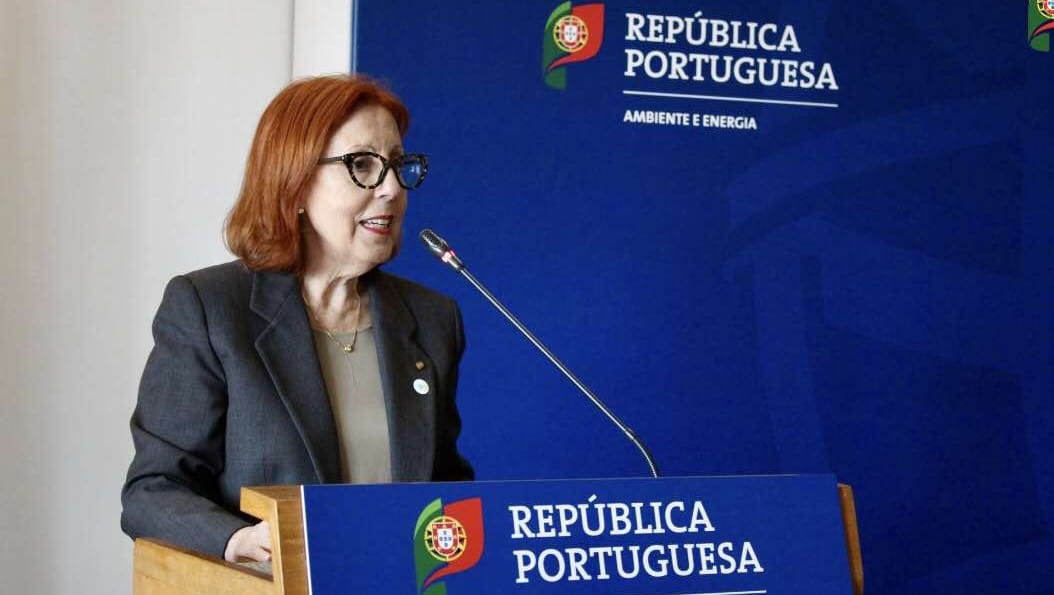
The Minister of Environment and Energy, Maria da Graça Carvalho, assured yesterday that in the Government “there has never been the slightest pressure” on environmental entities and that “all projects are carried out without government interference.”
“I never interfered, they never even approached me for interference in these matters,” said the minister, who was speaking at a hearing before the Parliamentary Committee on Environment and Energy.
The minister was questioned by Socialist deputy Luís Graça about a controversy involving the Minister of Agriculture, José Manuel Fernandes, and the Institute for Nature Conservation and Forests (ICNF), specifically for having called members of the structure “cowards” and “liars” following a video that he sent to a meeting of ICNF leaders.
Maria da Graça Carvalho did not comment on the case but during the hearing she ended up lamenting what happened, because in the meeting where it occurred, last Friday, there was no discussion of any controversy.
Luís Graça stated that those who oversee the ICNF (oversight by Environment and Agriculture) cannot “insult” and “bad-mouth” the agency. “Given what was said, if the ICNF leaders do not resign the only option left is for the minister to resign. Otherwise we may be led to think that the environment is the main obstacle to the Recovery and Resilience Plan, PRR,” said the deputy, who spoke of “public bullying” and of “lobbying.”
And he added: “we cannot value the environment against the bodies that exist to defend the environment.”
The minister guaranteed the Government’s total impartiality regarding projects that require analysis by environmental authorities, and said that her public position is based on ethics and public policies with scientific evidence. And she added: “With me there has been no exception to that rule.”
Regarding the PRR issue (the Minister of Economy also, in a hearing, linked delays in the PRR to the environmental area), the minister clarified that Manuel Castro Almeida phoned her after those statements.
“What I said here was that the environment complicated the execution of the PRR because we inherited some issues from the past, such as the Windows program, which were very complex, difficult to implement,” said Maria da Graça Carvalho, adding that the minister was not referring to programs or projects.
The Economy Minister did not say, it was clarified, that the environmental policy was restrictive to the country’s development. Maria da Graça Carvalho, following an intervention by Deputy Jorge Pinto, from Livre, even said that only 13% of the projects presented received a negative opinion in recent years, “a minority.”
The controversy related to the ICNF was also commented on by other deputies, with PCP and Livre condemning the statements of the Minister of Agriculture. However Jorge Teixeira, from Iniciativa Liberal, supported the minister’s statements and said that “you cannot block all projects, including those necessary for the energy transition,” and asked how this “restrictive legislation” will be reformed.
Maria da Graça Carvalho replied by referring to the European Union’s restrictive environmental policies.
And also regarding last week’s ICNF meeting, she said that in that encounter she informed the leaders that she was looking at reorganizing the structure and that she would request an independent study to see how to optimize its operation.
Also questioned by the deputies about the felling of more than nine thousand cork oaks and holm oaks to enable projects, the minister lamented but said it was necessary.
Explaining that eight thousand of these trees were for modernizing a railway line, the minister said: “It costs us a lot, but it is a project with European funds, it was the only way to modernize the line.”
The minister also said that in many of these cases it is only the ICNF giving the opinion, underscoring that there is compensation with new trees and that in these matters the country should enter a “calmer phase” after the PRR.