An Australian researcher argues that sugarcane could play a decisive role in the future of sustainable aviation fuel, by enabling the substitution of fossil-origin carbon without compromising food production or biodiversity.
The position comes from Professor Emeritus Robert Henry of the University of Queensland, who is part of the ARC Research Hub for Engineering Plants to Replace Fossil Carbon, a research center that brings together universities and international companies with the aim of developing renewable fuels viable at the scale of the aviation industry.
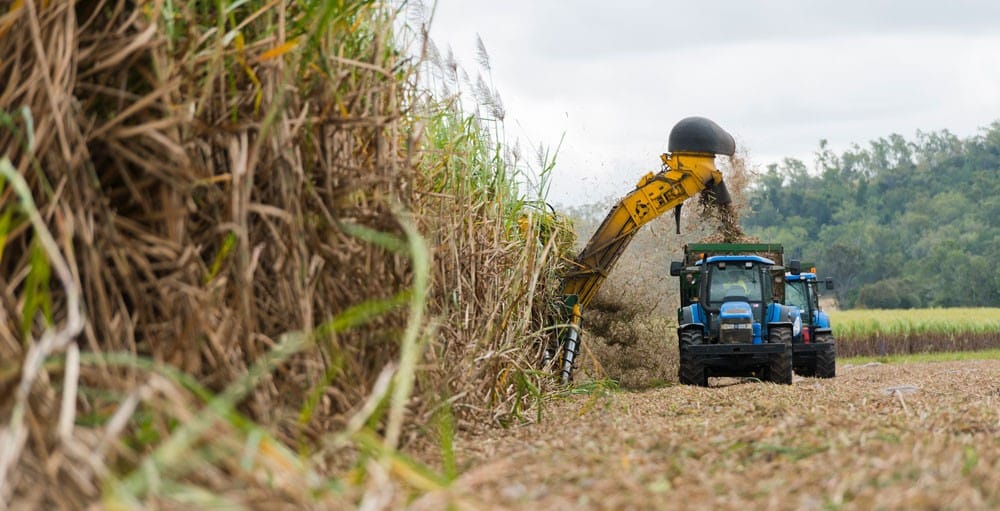
According to the researcher, plants are currently the best available source of renewable carbon, and among all the options analyzed, sugarcane stands out for its productivity and ability to be produced at large scale. “It is the only agricultural crop that is already produced in the volumes necessary to meet the demands of this sector,” he notes.
Other alternatives have been studied, but present significant limitations. Algae, for example, are frequently pointed to as promising, but the high costs make them uncompetitive without the existence of high-value byproducts. Canola, used in some countries for the production of biofuels, raises food-security concerns and, above all, scale: yields per hectare are low and the area required to replace aviation fuel would exceed the size of Australia.
The use of land is, therefore, a critical factor. Sugarcane combines high productivity with a relatively small land footprint, which makes it particularly attractive. Ongoing research focuses on improving the biomass of the plants, so as to increase the proportion that can be converted into fuel without reducing yields.
To accelerate this process, scientists are using a phased strategy: they start by testing genetic alterations in simpler crops, such as rice, then move on to sorghum — a close relative of sugarcane — before applying the most promising solutions to sugarcane itself, whose genetics are more complex.
Australia, and in particular the state of Queensland, emerges as a privileged territory to lead this transition. The country has a consolidated sugar industry, strong scientific capacity, and international partnerships. Moreover, the high level of air travel creates a strong domestic demand for sustainable fuels.
“The challenge is complex, but the potential is enormous,” says Robert Henry. If the commercial production of sustainable aviation fuel becomes a reality — something the researchers believe is within reach — international adoption could be rapid. In this scenario, sugarcane could place Australia at the forefront of the energy transition in the aviation sector.