
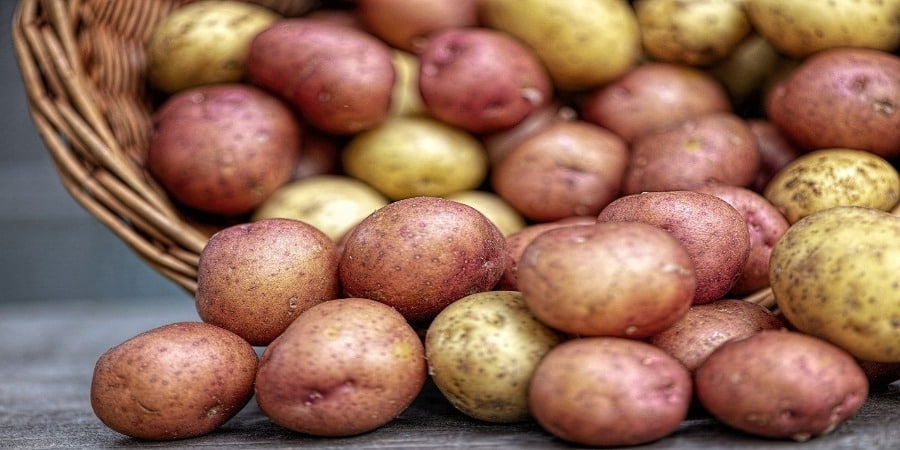
The potato (Solanum tuberosum) is a tuber originating from the Andes region, the present-day Peru, with about 8,000 years of history. Although it remains the region where the greatest genetic diversity of this food is found today (151 wild species), there are between 3,000 and 4,000 varieties, with very different characteristics.
From early on, due to its nutritional value, it was a crucial food in Indigenous communities, including in the diet of the Incas. With the Spanish invasions in the 1500s, its expansion to Europe occurred. The country that achieved the most success was Ireland, where it developed best due to climatic conditions, according to The International Potato Center. From the sixteenth century its global dispersion began, from the Netherlands to Russia.
Rebecca Earle, an American historian, calls it “the most successful immigrant in the world” given that “it is cultivated practically all over the world, and in practically everywhere,” she explains on the BBC.
The potato is the fourth most-consumed food worldwide, and is considered by many populations as part of their tradition. According to Porbatata – Potato Association of Portugal – “The largest producer of potatoes is China, where almost a third of the world’s production is harvested (more than 99 million tonnes).” As for countries such as “Russia, India, Ukraine and the United States,” they are the ones occupying the “Top 5 of the largest producers.”
The year 2008 was designated the International Year of the Potato by the Food and Agriculture Organization of the United Nations (FAO), in order to “raise awareness of the potato’s fundamental role for agriculture, the economy, and global food security.”
The BBC also notes that climate change could have consequences for tuber production, leading to a global reduction of 26% by 2085.