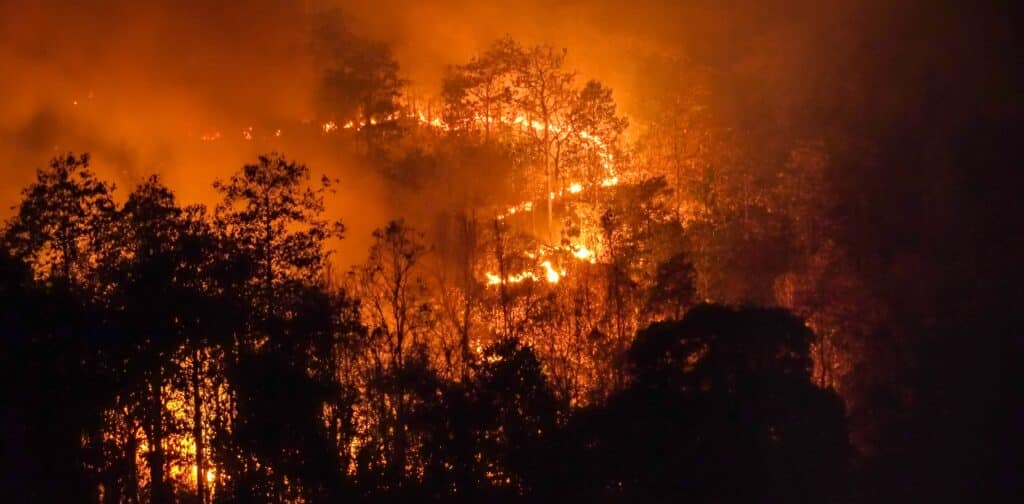
The wildfires that struck Los Angeles in January 2025, in the midst of the urban-wildland interface, sparked a wide international debate, including in Australia, about the causes of the catastrophe and the risk of similar events in other countries. A year later, scientific investigation has focused on analyzing the factors that were at the origin of the fires, their impacts and the vulnerabilities of the built environment, as well as resilience measures that can reduce destruction, according to a statement from Natural Hazards Research Australia.
Causes and Impacts
According to the same source, although they occurred in winter, extremely dry conditions and strong winds, reaching nearly 160 km/h, created a scenario conducive to large-scale wildfires. In January 2025, dozens of fires were sparked, with the Palisades and Eaton fires standing out, devastating neighboring suburbs. About 37,000 acres burned and more than 16,000 structures were destroyed, largely due to the spread of fire from house to house. Insurance losses rose to around 40 billion dollars, making this the most costly wildfire ever. In addition to the 31 direct deaths, studies identified hundreds of indirect deaths linked to poor air quality, stress, and disruptions to health systems.
Vulnerabilities of the Built Environment
A large share of the destroyed buildings was constructed before the 2008 enactment of building codes for urban-wildland interface zones, which explains the uneven adoption of protective measures. Investigations showed that the close spacing between structures, the presence of vegetation and other flammable materials near homes, and the combination of resilient construction elements with vulnerable components significantly increased the risk of destruction. Studies indicate that the distance between buildings is one of the most determining factors in the survival of structures, especially in densely urbanized areas.
Resilience and Public Policy
The research concludes that fire resilience requires an integrated approach, in which no single measure is sufficient. The combination of appropriate building codes, reinforcement of existing buildings, separation between structures, and removal of combustible materials has proven to be the most effective strategy. In this context, California moves forward with the creation of the so-called Zone 0, which requires the elimination of flammable materials within a 1.2-meter radius around homes, with the aim of reducing ignitions caused by embers and flames. The new regulation is set to take effect in 2026 and will cover about two million homes.
Lessons for Australia
Australia has experience with severe fires in urban areas and faces similar challenges, with many homes unprepared for the increasing risk. Recent research confirms that creating defensible space around houses significantly reduces losses, recommending special attention to the area immediately surrounding the homes. Experts advocate a national housing resilience strategy, a mandatory system for classifying home resilience, and financial incentives to promote strengthening of the built environment, in order to reduce the impact of future wildfires.