
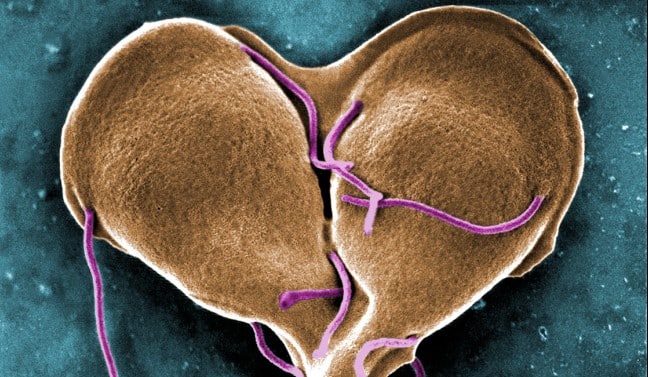
Researchers have discovered how a strain of a diarrhea-causing parasite managed to broaden the number of species it infects, offering new clues about how parasitic infections arise and spread to humans.
The study, led by the Walter and Eliza Hall Institute (WEHI), revealed a genetic shortcut that allowed Giardia duodenalis — and potentially many other parasites — to jump to new hosts, at the cost of its long-term survival. The findings also help explain how these organisms develop resistance to drugs, with implications for treatment strategies worldwide.
According to the authors, understanding these mechanisms can strengthen public health surveillance and support efforts to anticipate the transmission of zoonotic diseases and the emergence of resistances before these become widespread.
Key conclusions of the study
One of the study’s main conclusions is that an asexual lineage of the parasite Giardia can infect a broader range of hosts than its sexually reproducing counterpart, though that advantage comes at a high evolutionary cost, since the accumulation of deleterious mutations ultimately leads to the lineage’s extinction. The research also confirms that giardiasis continues to pose a global public health problem, causing chronic diarrhea and nutritional deficiencies, especially in children.
Additionally, the researchers conclude that the same evolutionary trade-offs that facilitate adaptation to new hosts may also be at the root of the development of drug resistance, underscoring the need for more effective treatment strategies and surveillance.
A Global Health Threat
Giardiasis interferes with nutrient absorption in the small intestine, causing persistent diarrhea and growth delays. The parasite’s resistant cysts survive for long periods in water and the environment, making outbreaks difficult to control.
In Australia, up to 600,000 cases are recorded per year, while globally the number exceeds 280 million. The disease disproportionately affects children in poorer communities and in remote Indigenous communities.
According to the principal investigator, Professor Aaron Jex, the expansion of a parasite from a single host to multiple hosts makes public health control much more complex.
“By identifying the genetic patterns behind this shift, we can better anticipate where and how future infections may arise and develop more effective surveillance systems to curb them,” he said.
The survival of the ‘almost fit’
The study, published in the journal Nature Communications, revealed an evolutionary paradox: an asexual lineage of Giardia managed to infect a broader range of hosts than its sexually reproducing predecessor, despite being on a genetic trajectory toward extinction.
Abandoning sexual reproduction may have been the key for the parasite to become a generalist, capable of infecting companion animals, cattle, wildlife, and humans. This ability to switch hosts is a central factor in the emergence of new human diseases.
However, the advantage is temporary. Without exchange of genetic material, deleterious mutations accumulate over time, weakening the parasite until the lineage collapses.
“It’s not survival of the fittest, but of the ‘almost fit,’” summarizes Aaron Jex. “That short-term advantage allows the parasite to spread before genetic problems become fatal.”
An unseen path to drug resistance
The same mechanism may help explain how drug resistance arises. The mutations that enable survival under treatment tend to reduce the parasite’s overall fitness. In sexually reproducing organisms, these variants are quickly outcompeted by more competitive ones.
In asexually reproducing parasites, however, these mutations persist, creating a window of opportunity for the spread of resistant strains.
“When sexual reproduction disappears, natural selection becomes less efficient,” explains the researcher. “That inefficiency can allow drug-resistant parasites to persist and spread.”
Why the sex of parasites matters
Sexual reproduction serves not only to generate offspring but also to ensure long-term survival. Genetic recombination helps parasites stay competitive in the evolutionary race with their hosts.
When this process ceases, the immediate gains — such as the ability to infect new hosts — come at the expense of future viability.
The team now aims to investigate whether the same genetic shortcuts that facilitate host switching also enable the persistence of resistant strains, and how this knowledge can guide treatment strategies and surveillance systems capable of preventing outbreaks before they take hold.