
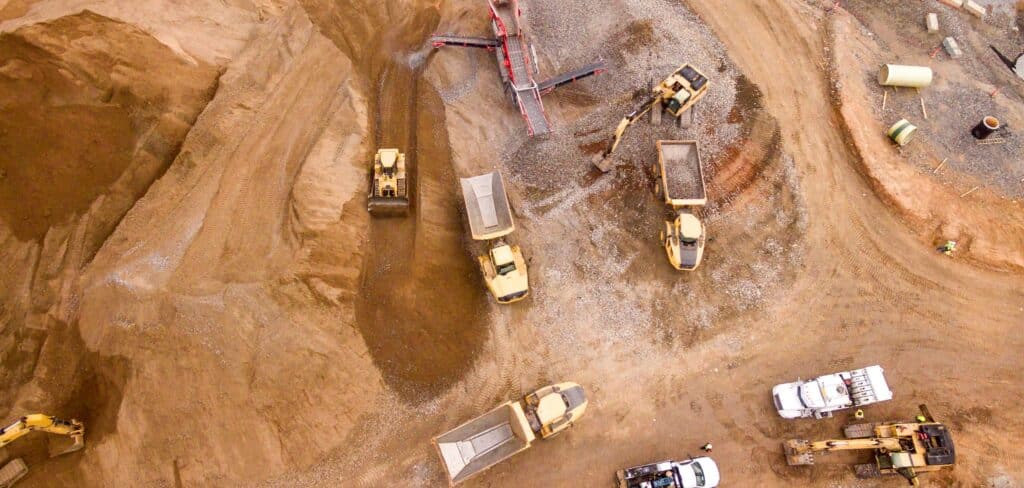
The expansion and intensification of existing mines is receiving less regulatory and public attention than the construction of new mining operations, even though it can entail more severe environmental and social impacts in the long term. The warning comes from an international study published in the scientific journal One Earth, from the Cell Press group.
According to the investigation, led by Deanna Kemp, from the University of Queensland in Australia, mining companies worldwide are increasingly betting on the so-called brownfield mining — the prolonged and in-depth exploitation of mines already in operation — to meet the growing global demand for minerals essential to the energy transition.
“A large part of the political debate centers on the approval of new mines of critical minerals, which is important,” Kemp explains. “But our study draws attention to a deeper shift: the ongoing expansion of existing mines and the long-term environmental and social responsibilities that this creates.”
Demand Driven by the Energy Transition
The global need for minerals has risen steadily in recent decades, driven chiefly by the development of clean energy infrastructure. Metals such as copper, cobalt, and lithium are essential for electric vehicles, electrical networks and batteries. Some estimates point to demand increasing up to sixfold by 2040.
In light of this scenario, mining companies have preferred to expand licensed operations, a choice generally faster and less subject to public scrutiny than opening new mines — a process that can take up to 15 years from licensing to development.
However, this practice tends to generate more waste, occupy larger swaths of land, and cause more significant cumulative impacts in the affected areas.
Concentrated Environmental and Social Risks
To understand the global dimension of the phenomenon, the team analyzed mineral production and investment data, identifying 366 brownfield exploration sites worldwide. Cross-referencing this information with satellite imagery and social and environmental indicators, the researchers arrived at troubling conclusions.
More than 20% of these mines are located within 50 kilometers of ecologically intact or minimally modified areas, including Arctic tundra regions and high-altitude mountainous zones. More than half are situated within 20 kilometers of protected areas or areas of high biodiversity, which could pose a direct threat to sensitive ecosystems.
The study also reveals that many of these operations are concentrated in countries with high levels of structural inequality, where access to education and employment is uneven. More than a third of the mines analyzed are located in countries affected by armed conflicts or militarization.
In total, about 80% of the brownfield mines studied are located in contexts that combine multiple risk factors, such as water scarcity, weak governance, and limited freedom of the press.
“What impressed us the most was the fact that many of these mines operate in contexts with layered challenges—social and environmental,” Kemp notes. “These are situations where oversight is more difficult, while risks accumulate.”
Difficult-to-Detect Expansion
The researcher also warns that some expansions are taking place underground, using new mining technologies, which makes them difficult to detect and assess through satellite imagery. For this reason, the authors acknowledge that the real impact of these operations may be underestimated.
For Kemp, the answer lies in adapting legal frameworks to the sector’s current reality. “If larger, deeper, and longer-lasting mines are the path to making the energy transition viable, then regulatory systems must reflect that practice,” she argues. “This means assessing mine expansions for their cumulative and long-term effects, and not treating them as routine decisions compared with new projects.”
The study reinforces the need for a closer look at a silent transformation of the mining industry, whose consequences could shape the environment and communities for decades.